Two permissions are involved, and they are not the same permission. Airspace is about whether an aircraft may be in that volume of sky at all. Venue is about whether the operator of the ground you take off from and shoot over consents. A shoot that has one but not the other is the single most common reason crews are stopped on site. Treat them as separate workstreams, get both answers in writing, and carry them on the day.
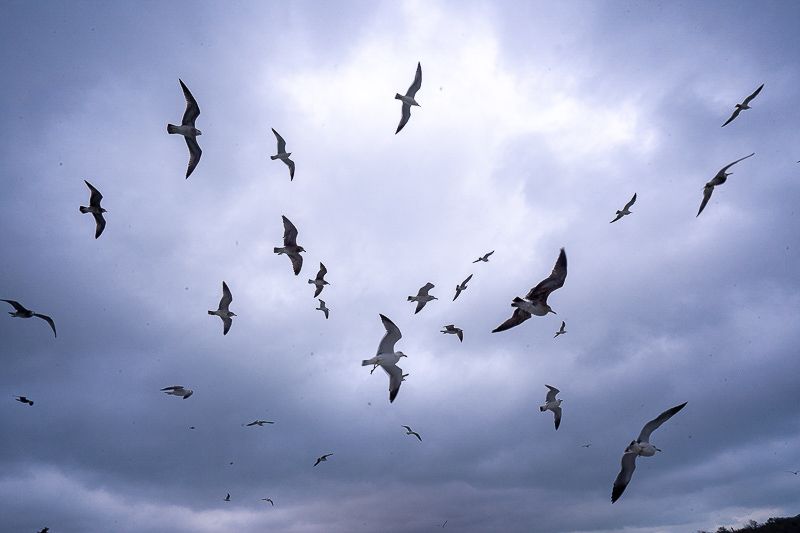
Airspace by Area and Situation
| Area or situation | Classification | What it means in practice | Note |
|---|---|---|---|
| Airport clearance zones and approaches | Closed | No take-off, including below approach paths | Covers large parts of coastal and urban Shandong; check each site |
| Government, military and sensitive sites | Closed | No flight and no filming | Includes some port areas, lighthouses and communications sites |
| Major events, races and shows | Temporary control | No flight during the control window | Announced at short notice; common in festival seasons |
| Above ticketed attractions | Restricted | Written consent from the operator required | Most attractions do not open this to individual visitors |
| Mountain, forest and protected areas | Restricted or closed | Depends on protection level | Fire-prevention and nesting seasons add limits |
| Open countryside and village outskirts | Generally possible | File properly, then fly | Still avoid crowds and buildings overhead |
Read the table in that order: airspace first, then venue. Passing the airspace check is only the first gate. Wherever the take-off point sits, whoever controls that ground also has to agree.
Equipment and Which Rules Apply
| Equipment | Aircraft? | Governing rules | Practical note |
|---|---|---|---|
| Folding consumer drone | Yes | Airspace filing plus venue consent | Small does not mean exempt; closed airspace is closed |
| Professional cinema drone | Yes | Registration, operator qualification, airspace filing, venue consent | Commercial work also needs purpose statements and insurance |
| FPV and self-built aircraft | Yes | Same as aircraft, with closer scrutiny | Rarely appropriate for organised shoots |
| Handheld gimbal and extension pole | No | Attraction rules on filming equipment | May be discouraged in crowds; commercial use needs an application |
| Tripod, slider, light stands | No | Treated as bulky equipment | Occupying space or a walkway needs a booked slot |
| Lighting and portable power | No | Electrical and site safety rules | Indoor venues usually need power declared in advance |
The easily missed category is the non-aircraft one. A tripod is not subject to airspace rules, but once a tripod arrives with lights and a slider and the crew starts holding a position, the activity stops looking like visitor photography and starts looking like a shoot that should have been booked.
Filing Timeline
| When | What to do | Output |
|---|---|---|
| 10 to 7 working days out | Fix primary and backup positions, check airspace class | Shortlist with no-fly screening |
| 7 to 5 working days out | Submit the filming application to the attraction or venue | Written consent, or a written refusal to plan around |
| 3 working days out | Complete the flight plan filing as required | Filing receipt or approval record |
| One day before | Recheck for temporary control notices | Final flyable window and a fallback |
| On the day | Report to site staff and confirm the approved scope | On-site confirmation and an emergency contact |
What Goes Wrong
- Treating one approval as two. Airspace consent and venue consent are separate; without both, do not launch.
- Assuming a small drone is exempt. Weight changes registration and qualification, not the airspace class.
- Missing temporary notices. Events and races add control windows that appear days before, so recheck the day before.
- Underestimating the tripod. Tripod plus lights plus a slider turns visitor photography into a commercial shoot.
- Flying over people for the shot. The risk and the consequence are far larger than one clip is worth.
Legal Alternatives When You Cannot Fly
| Shot wanted | Alternative | Where it works |
|---|---|---|
| Coastline and bay overview | Hilltop platform or high viewing point | Coastal hill parks and lookouts |
| Building groups and street layout | Long-lens compression from the opposite shore | Facing waterfronts and elevated public areas |
| Mountain layers and sea of cloud | Official shuttle and cable car viewpoints | Shuttle stops and upper cable car stations |
| Sunrise and sunset scale | Early positioning plus wide stitching | East-facing bays and open flats |
| Motion and follow shots | Car-to-car and ground gimbal work | Coastal roads and park walkways |
These are not a compromise. Shandong's coast and mountains are dense with legal viewpoints, and a long lens from a lookout often produces more depth than a top-down frame, with no risk of being stopped.
Questions
Q1. Who has to approve a drone flight at an attraction in Shandong?
Two parties at least. The airspace side is filed with the civil aviation and public security authorities under their current rules, and the venue side is a filming application to the attraction or site management. Both approvals are needed; holding only one of them does not make the flight lawful.
Q2. Does a sub-250g drone avoid the paperwork?
No. Weight affects registration and operator qualification requirements but never changes the classification of the airspace. A no-fly zone is closed to aircraft of any size, and taking off inside an attraction still requires the operator's consent.
Q3. Are tripods and gimbals treated as controlled equipment?
They are not aircraft, so airspace rules do not apply, but they are filming equipment and most attractions regulate commercial shooting and bulky gear. A tripod may be discouraged in crowded areas, and commercial use generally needs an application in advance.
Q4. What can replace an aerial shot when flying is not allowed?
High viewing platforms and hilltop lookouts, compression with a long lens from the opposite shore or a nearby elevated point, and legal positions along official shuttle and cable car routes. Coastal and mountain areas of Shandong have many such viewpoints, and the result is often more layered than a top-down frame.
Q5. How early should the paperwork start, and what is needed?
Start no later than seven working days before departure. Expect to provide the flight area and window, the aircraft model and serial, operator credentials, insurance and a statement of purpose, then reconfirm current rules before travelling. Shandong JunYue International Travel Agency can help prepare the filing: call +86 13953211866 or add WeChat 813556.
Drone compliance comes down to one sentence: treat "may I fly here" and "may I shoot here" as two separate questions, and hold written answers to both. Build backup positions into the itinerary so that a control notice on the day is an inconvenience rather than a lost shoot. Shandong JunYue International Travel Agency screens positions and handles venue applications for photography groups: call +86 13953211866 or add WeChat 813556.